Since launching Southbound Technologies, one of the things I've loved most has been meeting founders and prospective partners who share that same entrepreneurial spirit. The ambition, the passion for what they're building, the determination to make something happen. The energy is infectious.
And interestingly, one book keeps coming up in our conversations: Crossing the Chasm by Geoffrey A. Moore.
I first read it years ago as part of my MBA marketing course. Fast-forward a few decades, and here I am building a business designed to help emerging cybersecurity and AI companies tackle the very challenge Moore described. Funny how things come full circle.
I've just ordered myself another copy. It's now in its third edition, and if you haven't read it, I highly recommend you do. If you read it years ago, perhaps it's time for a refresher, because I think its central lesson is particularly relevant to the AI boom we're experiencing today.
Having extraordinary technology doesn't necessarily mean you have a commercially viable business.
The next wave of winners won't necessarily be those with the most impressive technology. They'll be the ones solving the right problems, for the right customers, with a compelling commercial return.
The AI boom has brought us back to the WHY
Simon Sinek popularised the importance of starting with WHY through his Golden Circle. While his work focuses on purpose and leadership, I think there's an equally important commercial question for technology founders:
WHY did you build this product in the first place?
- What problem were you trying to solve?
- Who has that problem?
- What is it costing them?
- Who else is already solving it?
- And what makes your solution genuinely different or better?
Because innovation alone doesn't create demand. A compelling business problem does.
We're seeing this play out across AI. The initial excitement has been extraordinary, but enterprise customers increasingly need to understand where AI can deliver measurable value. Can it reduce operating costs, improve productivity, increase revenue or reduce risk? Can it solve a problem that was previously too expensive or complex to address? And can it deliver those benefits at a cost that makes commercial sense?
Look at AI companies like Anthropic, which are building enterprise sales teams alongside applied AI roles focused specifically on helping customers achieve outcomes. To me, that reinforces an important point.
The challenge isn't simply getting organisations to adopt AI. It's finding valuable use cases that justify the investment. That's what will move AI from enthusiastic early adopters into mainstream enterprise adoption.
The chasm is a confidence problem
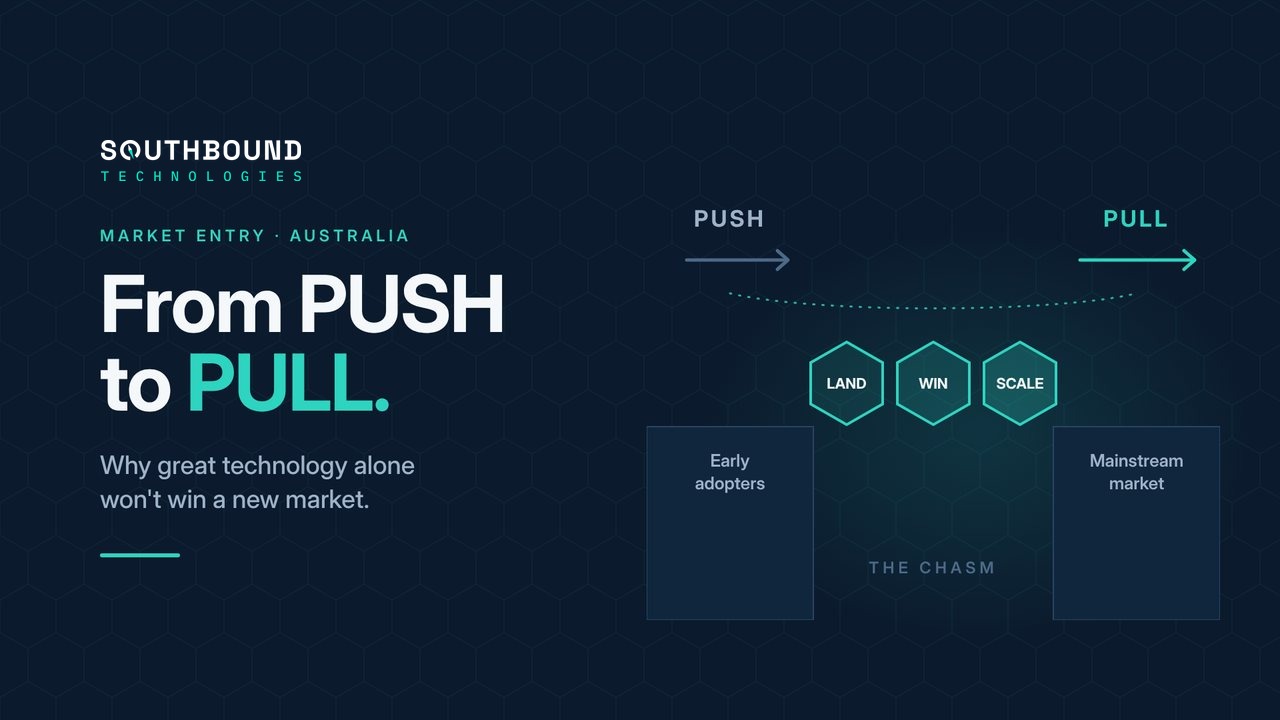
Moore's central argument is that early adopters and mainstream buyers behave differently. Early adopters are prepared to take risks because they see the potential of something new. Mainstream enterprise buyers want proof. They want to know the technology works, that it solves a meaningful problem and that adopting it won't create unnecessary risk.
For an emerging cybersecurity or AI vendor entering Australia, that presents a challenge. You may have a brilliant product and enthusiastic customers overseas, but Australian enterprise buyers may never have heard of you. They don't have local references. They don't know whether your technology will work in their environment. And they don't know who will answer the phone if something goes wrong.
If the fit hits the shan at 2 am in Sydney, who's going to fix it?
That's not a hypothetical concern for a CISO. It's a perfectly reasonable question, and it's why crossing the chasm requires more than a great product and a salesperson with a revenue target.
First, establish that the technology deserves to be sold
This is where The Southbound Method™ begins. We start by investigating the WHY. Why does the technology exist? What problem does it solve? How does it compare with existing alternatives? And which Australian organisations have that problem, with sufficient urgency and budget to act?
We're also building a vendor advisory board of experienced CISOs and CROs to help challenge those assumptions.
Our CISO advisers bring the buyer's perspective. Does the technology solve a genuine security problem? Is its differentiation credible? Will it integrate into the customer's environment? And is the vendor capable of supporting Australian customers when things go wrong?
Our CRO advisers bring the commercial perspective. Is there a viable market? Who owns the problem? Where does the budget come from? Is the pricing realistic? And can the vendor build a profitable, repeatable business?
We don't want to represent every emerging technology. We want to represent the ones that deserve a place in the market, because they're solving a unique problem, or solving an existing problem in a genuinely unique way.
That's also why we've committed to representing only one vendor per technology category. Our reputation depends on getting those decisions right.
Then comes the trust gap
I've spent more than 25 years in enterprise cybersecurity sales, and one thing hasn't changed: customers buy from people they trust.
I'm not talking about someone with a large LinkedIn network. I'm talking about experienced enterprise sellers who've spent decades in the trenches with their customers. They've navigated difficult projects, resolved problems, managed crises and earned reputations for sound judgment. They understand the customer's business, the pressures their executives face and the consequences of getting technology decisions wrong.
So when one of those sellers introduces an unfamiliar technology, the conversation starts from a different place. They've earned the right to be heard.
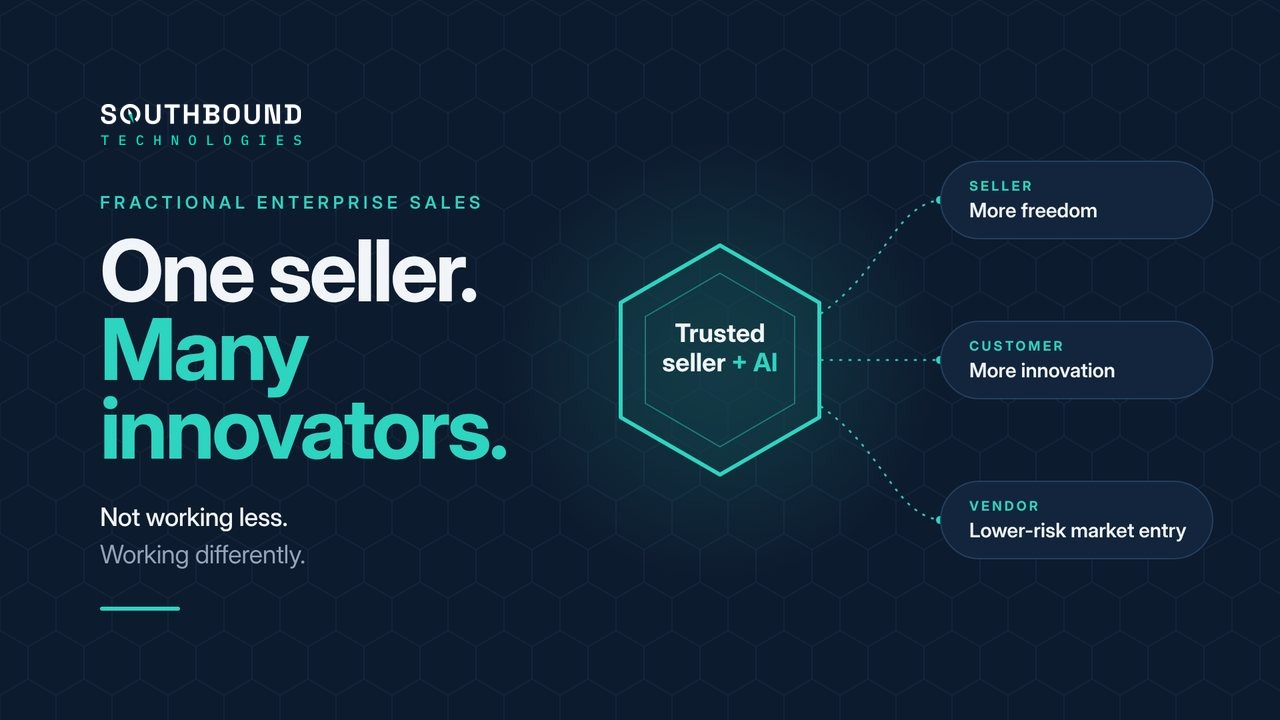
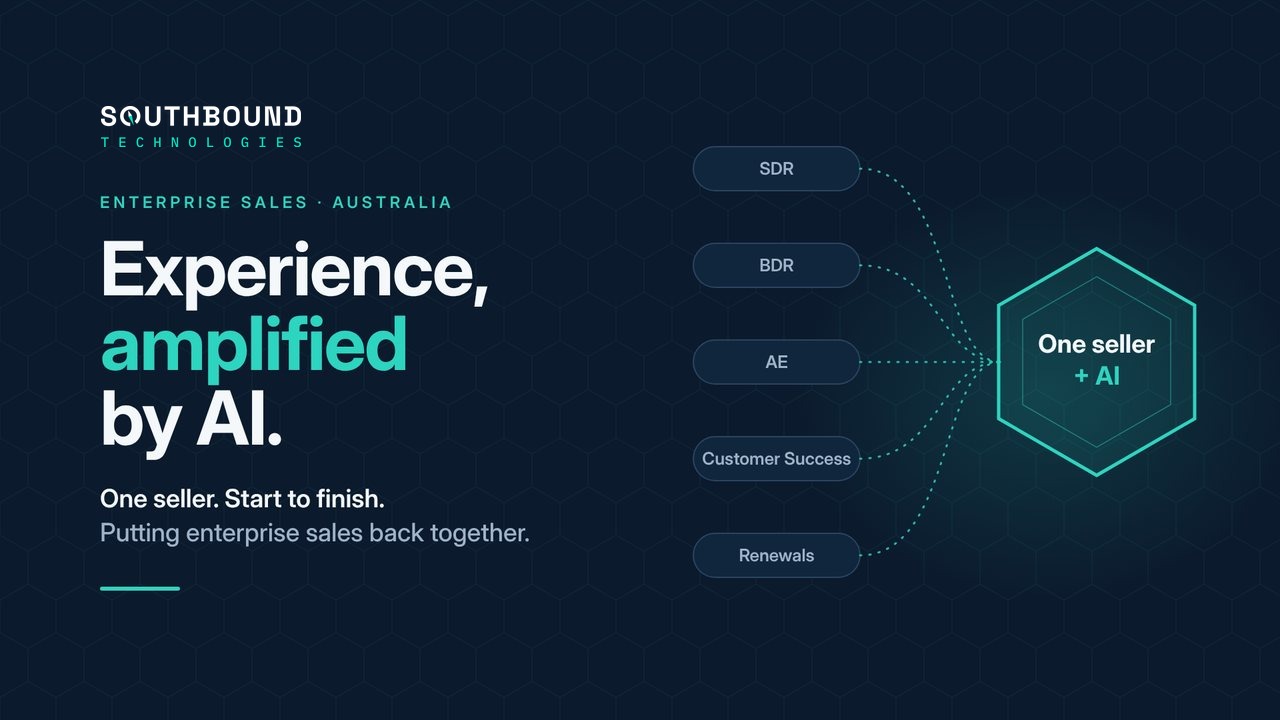
That's one of the advantages of Southbound Technologies' experienced fractional sales model. We bring established relationships and commercial credibility to emerging vendors that haven't yet built their own reputation in Australia.
But there's an important distinction.
The seller's reputation opens the door. The technology must then prove it deserves to be there.
Don't just win customers. Build a market
This is another lesson from Moore that I think startups should pay close attention to.
Winning five customers across five unrelated industries might generate revenue, but it doesn't necessarily create a repeatable business. Winning two or three credible lighthouse customers in a focused market segment, solving a similar problem with measurable outcomes, is a different proposition.
Now you have evidence. You understand the objections. You can demonstrate the commercial value. And you have customers who can help establish your credibility with others facing the same problem.
Don't just chase logos. Build a market.
That's how you begin moving from PUSH to PULL. In the beginning, you're pushing to create awareness, secure meetings and convince customers to take a chance on an unfamiliar vendor. But as you establish references, prove outcomes and develop trusted partnerships, something changes:
- Customers start recommending you.
- Partners start bringing you opportunities.
- Prospective buyers begin approaching you because they've heard about the problems you've solved.
The market starts pulling your technology towards it, rather than you having to push it into every conversation. That's market momentum.
Why we're building Southbound Technologies differently
I don't believe an emerging cybersecurity or AI company should commit to an expensive permanent Australian sales operation before understanding whether it has a viable market here. That's why we've structured Southbound Technologies around three stages:
- LAND — Find the WHY. Validate the technology, its differentiation, the competitive landscape and the Australian customers with compelling problems worth solving.
- WIN — Earn the trust. Deploy experienced fractional enterprise sellers who can open doors, uncover genuine opportunities, prove value and secure the lighthouse customers that establish market credibility.
- SCALE — Build the momentum. Use those customer outcomes to expand into adjacent markets, develop partnerships and build the local capabilities needed for sustainable growth.
The investment follows the evidence of commercial traction. Not the other way around.
The real opportunity
The AI boom is creating extraordinary opportunities, and so is the continuing innovation across cybersecurity. But not every innovative technology will become a successful business. And not every successful startup in one market will automatically succeed in another.
The winners will be those who identify the right problems, demonstrate a compelling commercial return, earn customer trust and turn early successes into repeatable demand.
That's the thinking behind Southbound Technologies, and it's the journey we want to take with the founders and technology companies we work with. From PUSH to PULL.
Introducing our Portfolio Partner Program
This thinking sits behind something new we're launching: the Southbound Technologies Portfolio Partner Program, for venture capital, private equity and growth equity firms.
If your portfolio companies are looking at Australia, we can help them validate the market before they commit to expensive local headcount, then build the trust and lighthouse customers that turn early wins into momentum. It's the same principle: the investment follows the evidence.
If you'd like to explore how we could support your portfolio, I'd love to talk. And if you're a founder considering Australia, the same invitation stands. Email hello@southboundtechnologies.com.
The Portfolio Partner Program is now our Strategic Partner Program.
So here's my question for founders, CROs and investors:
When you enter a new market, are you investing in someone to push your technology, or are you building a business that customers will eventually come looking for?
I'd love to hear your perspective.